case-study
user experience | user interface
Nautiplastic
A sampling device for paddle enthusiasts to collect data about micro-plasitcs polluting our bodies of water.
Client TotalEnergies, run as an internal innovation challenge across multiple teams
Role UX/UI designer and brand designer on a 4-person team, responsible for the logo, wireframes, and final application screens
Timeline One week (time-boxed challenge sprint)
Deliverable A mobile app concept, including preliminary branding (name and logo), paired with a physical sampling device, taking the design from wireframe through to final UI screens
Collect data and help make a difference in a fun way.
Empathize
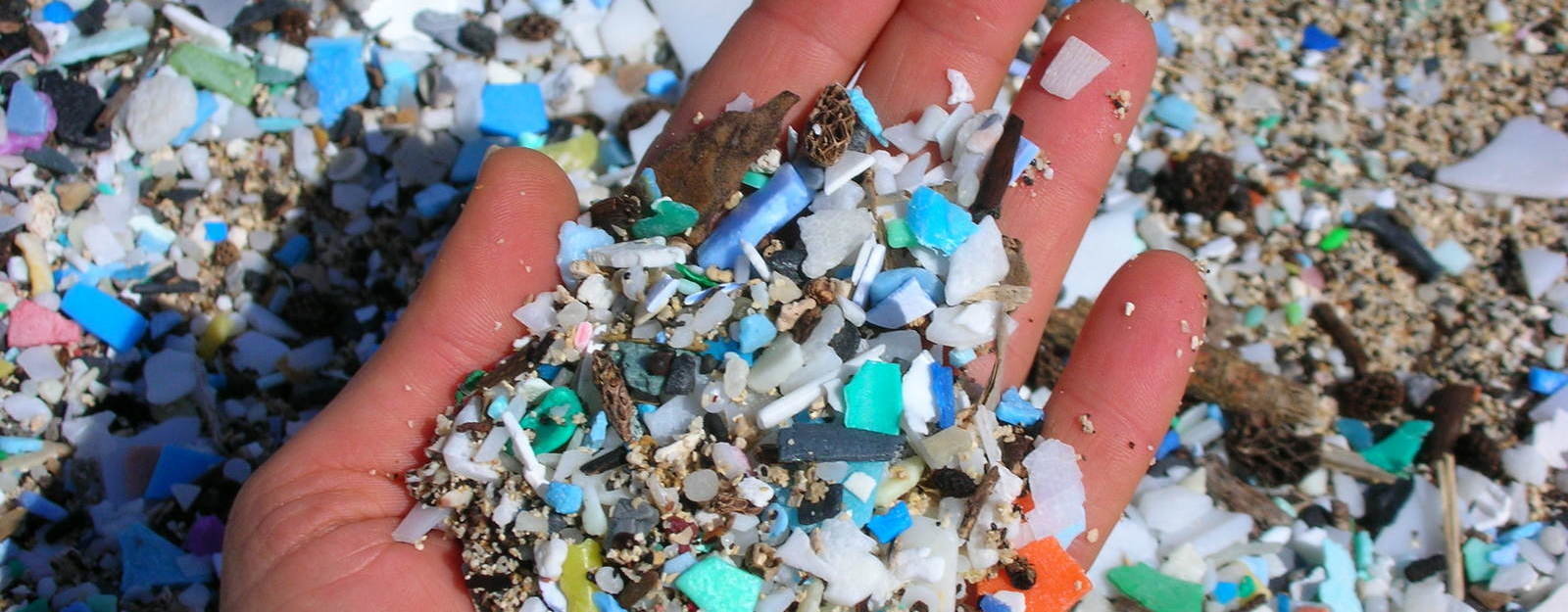
TotalEnergies framed the challenge around what they call the Silent Killer: micro-plastic pollution in bodies of water, a problem largely ignored by governments and major institutions. Teams were given no format restrictions, a solution could be a media campaign, an event, a device, anything, as long as it came with preliminary branding attached.
Our team chose a mobile app specifically because a phone is the one piece of technology almost everyone already carries. That made it the most accessible entry point compared to a standalone device or a campaign that required people to opt in some other way.
Define
Problem statement
Paddle sport enthusiasts, who already spend time on the water, need an easy and motivating way to contribute real data on micro-plastics, without requiring specialized equipment knowledge or a real change in their normal activity, so that awareness and water-quality data can scale past what governments and institutions currently gather.
Design problem
How do you pair a low-cost physical sampling device with a mobile app so casual users can log their activity, contribute real data, and stay motivated to keep participating, all within a one-week team sprint with no time built in for validation.
Ideate
Key decisions and reasoning:
Mobile app over any other format. A phone is the one device nearly everyone already owns, which maximized accessibility over a specialized device or a campaign-only approach.
GPS-logged routes tied to the sampling device. The device attaches to a paddle, kayak, or canoe and pairs to the user’s phone by Bluetooth. As the user paddles, their route is logged via GPS, and the samples collected along that path are later compared against lab results, tying the data directly to a specific location on the water.
Gamification modeled on Strava. The team’s read was that visibility and light competition, the same mechanics that get runners and cyclists sharing their activity, would do more for awareness than the data collection itself. Points, progress sharing, and social posting were built in from the start.
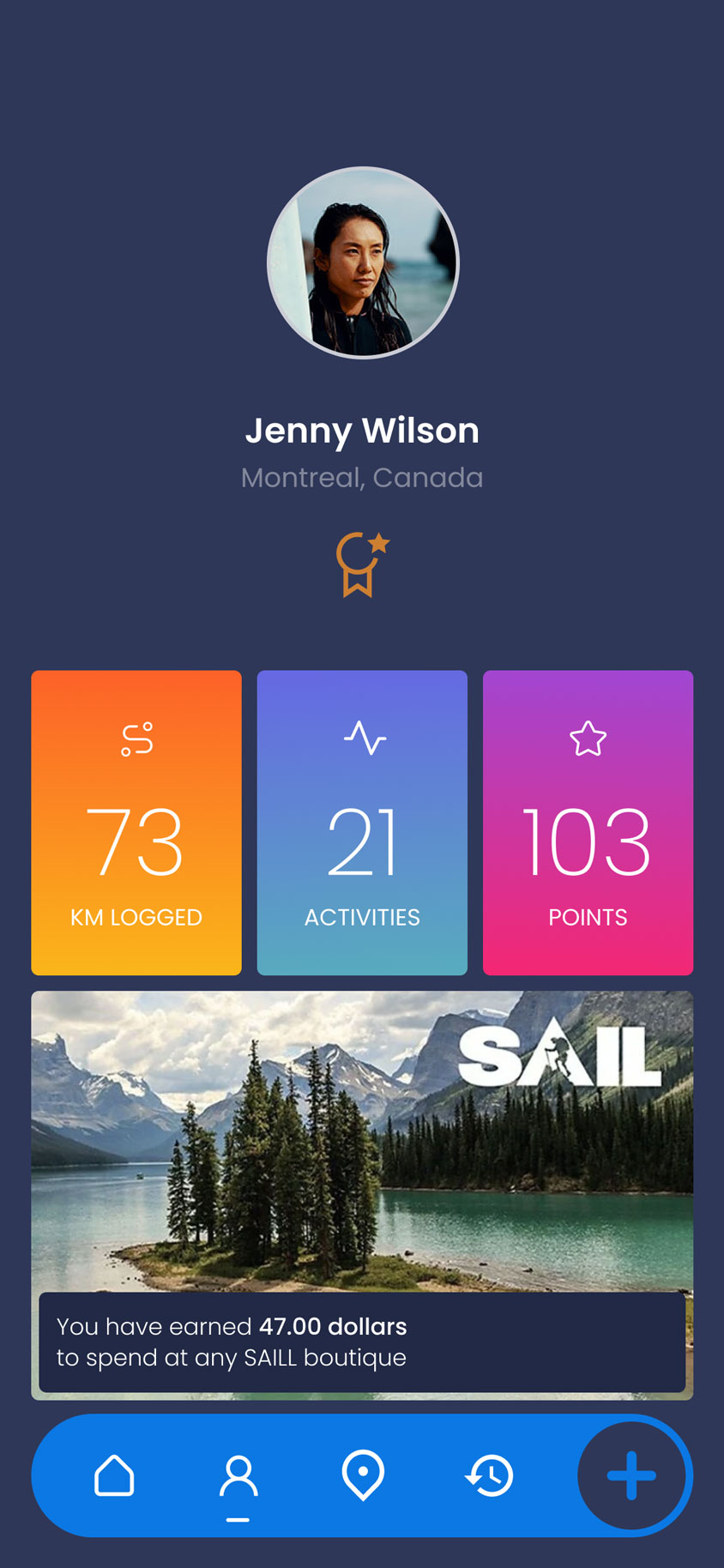
Rewards tied to partner drop-off locations, specifically outdoor stores. This was a deliberate business decision, not just a UX one: it sends a highly relevant audience, people already engaged in paddle sports, through the door of a sponsor’s store, and gives sponsors a direct incentive (redeemable rebates) to back the reward program.
Branding as a required deliverable. Name and logo had to be conceived alongside the product concept itself, not treated as an afterthought once the app was designed.
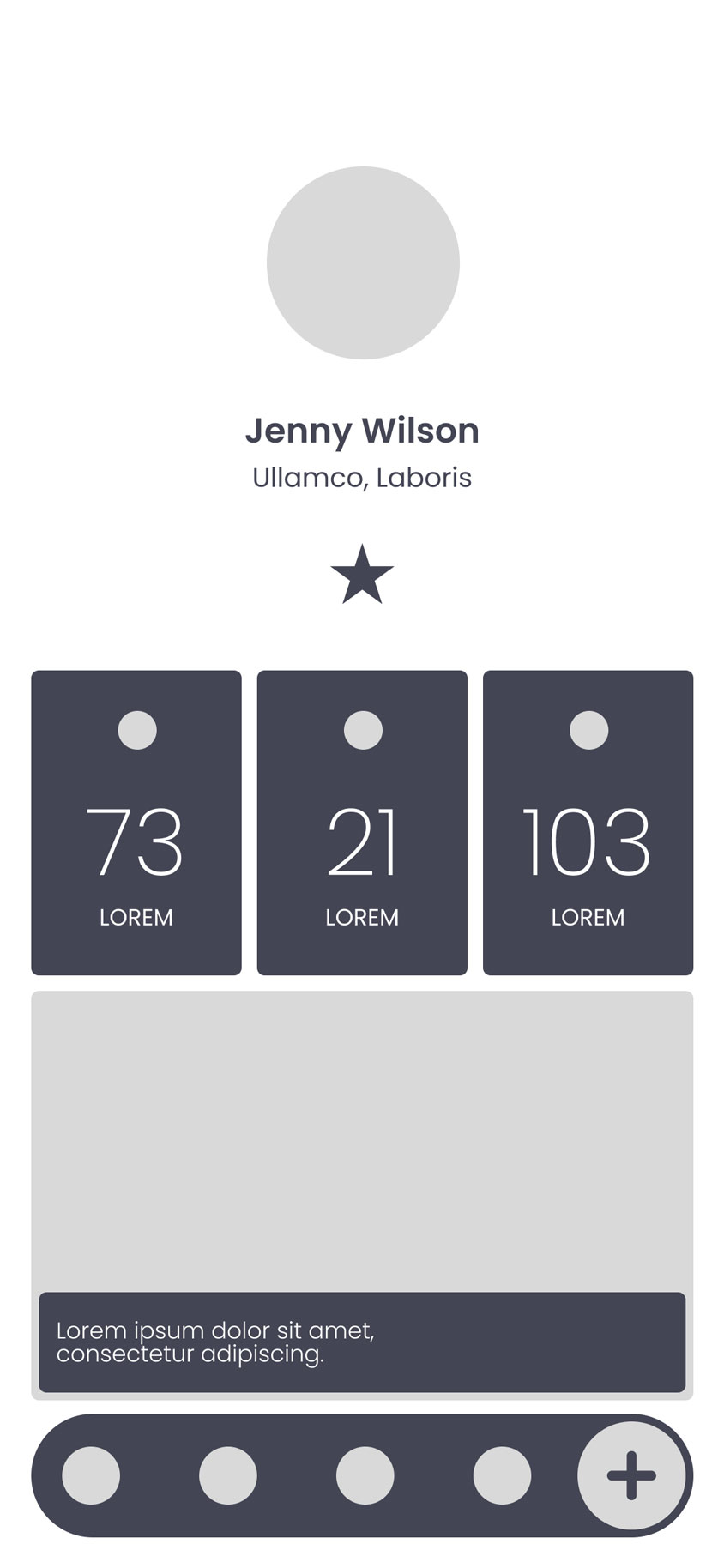
From wireframe to mockup to prototype
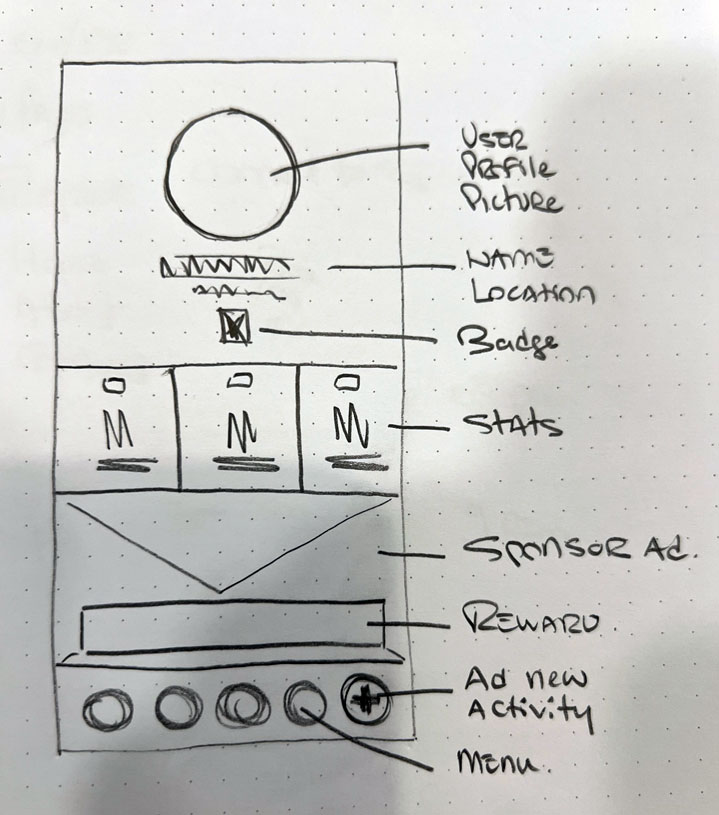
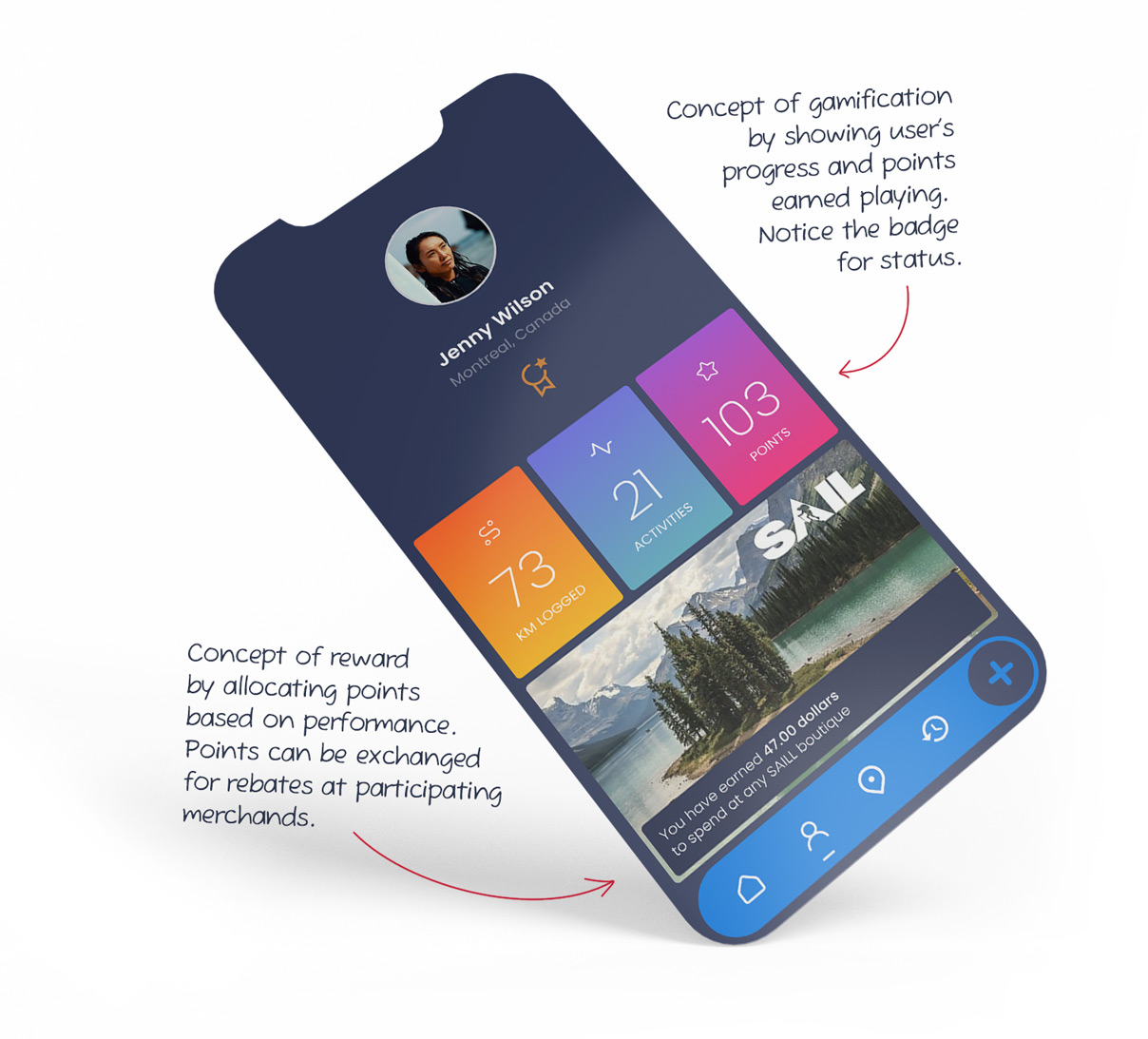
The user profile screen gives an overview of logged activity, earned points and rewards.

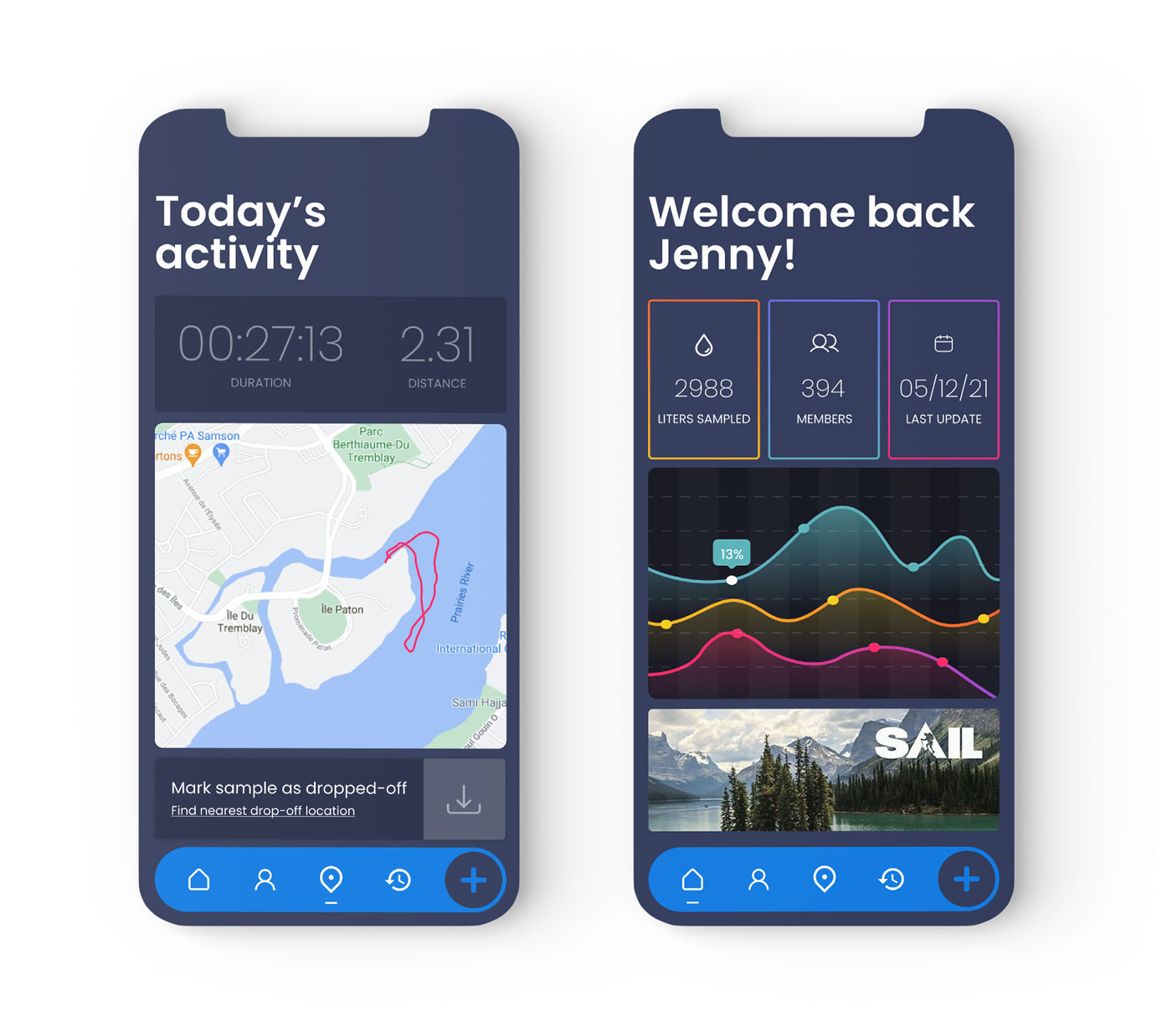
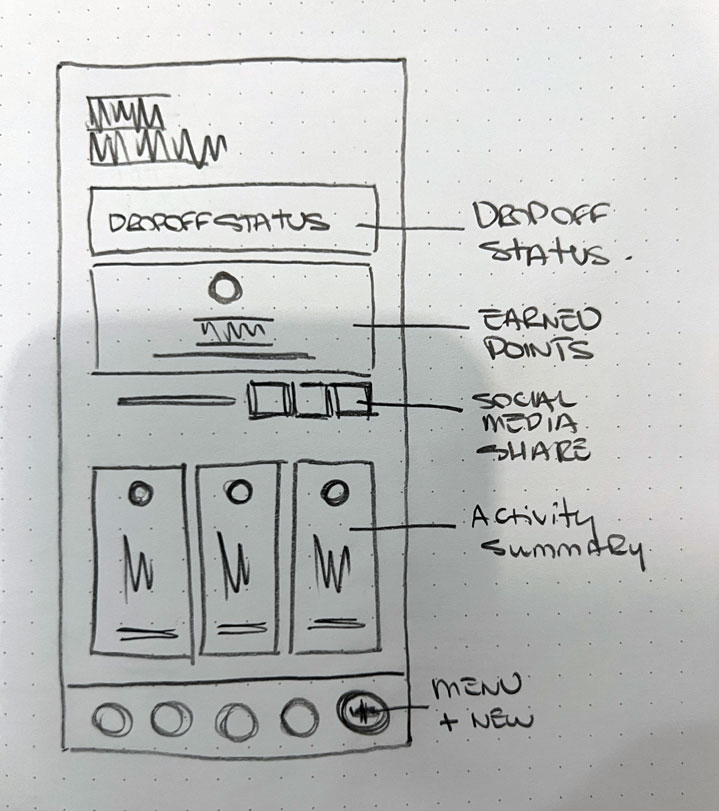
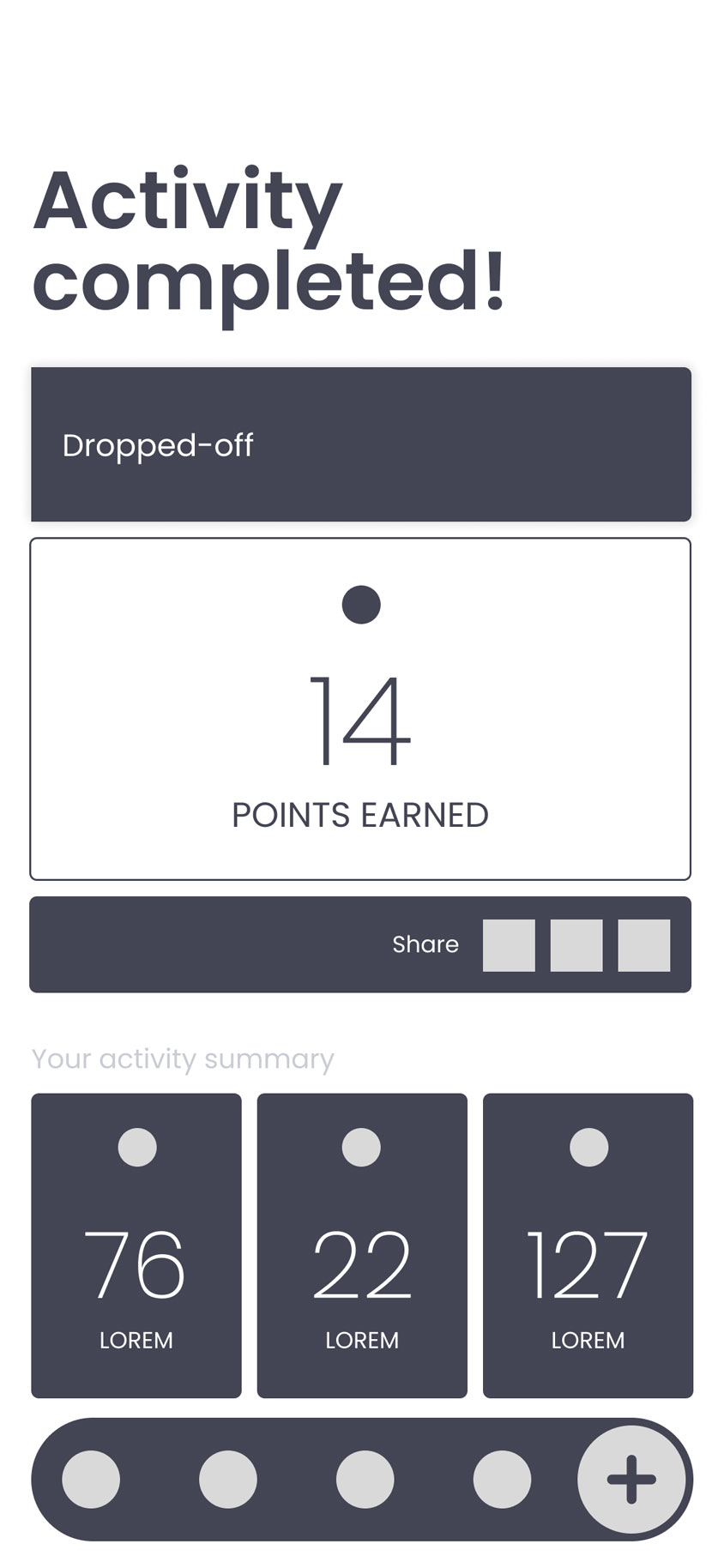
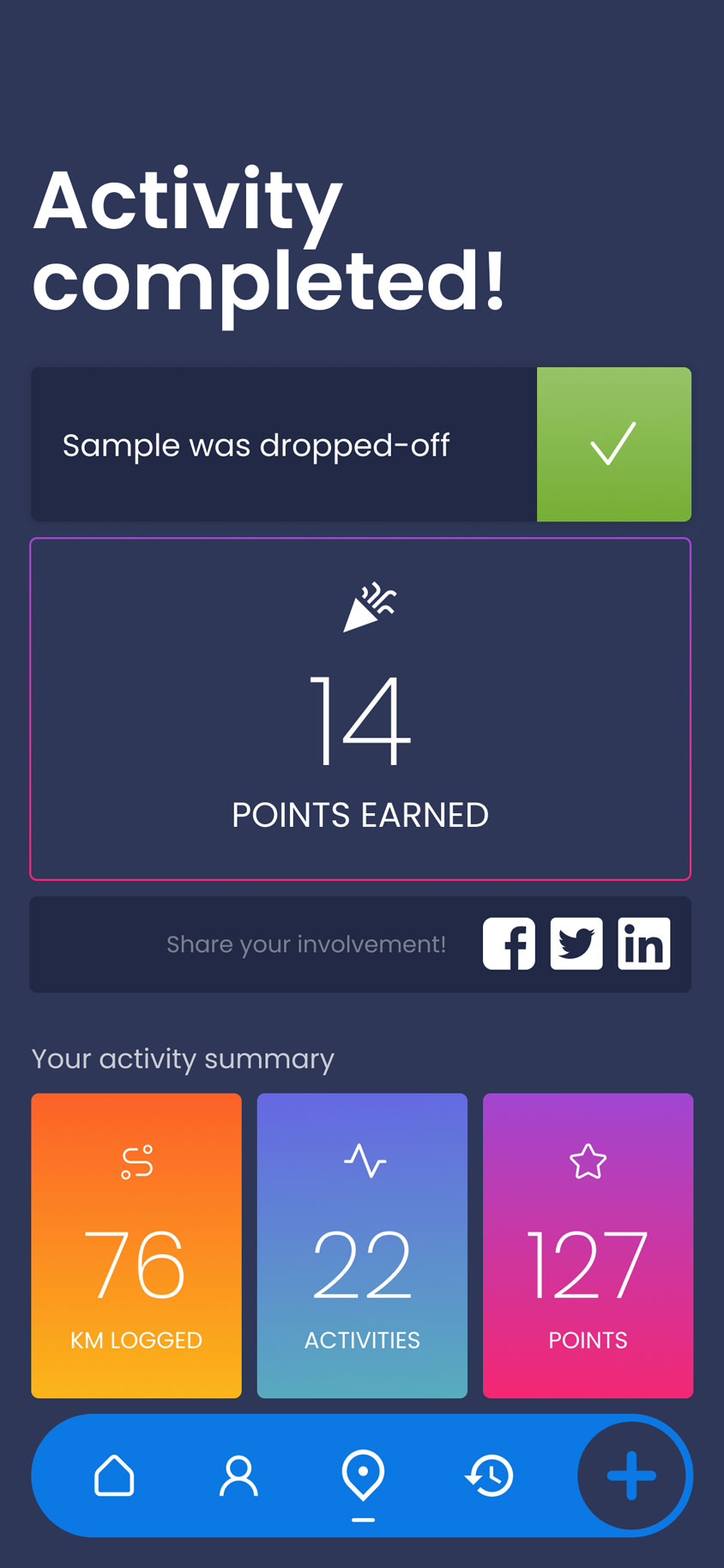
The activity screen is a summary of user’s last recorded activity and stats once sample is dropped off.
Solution
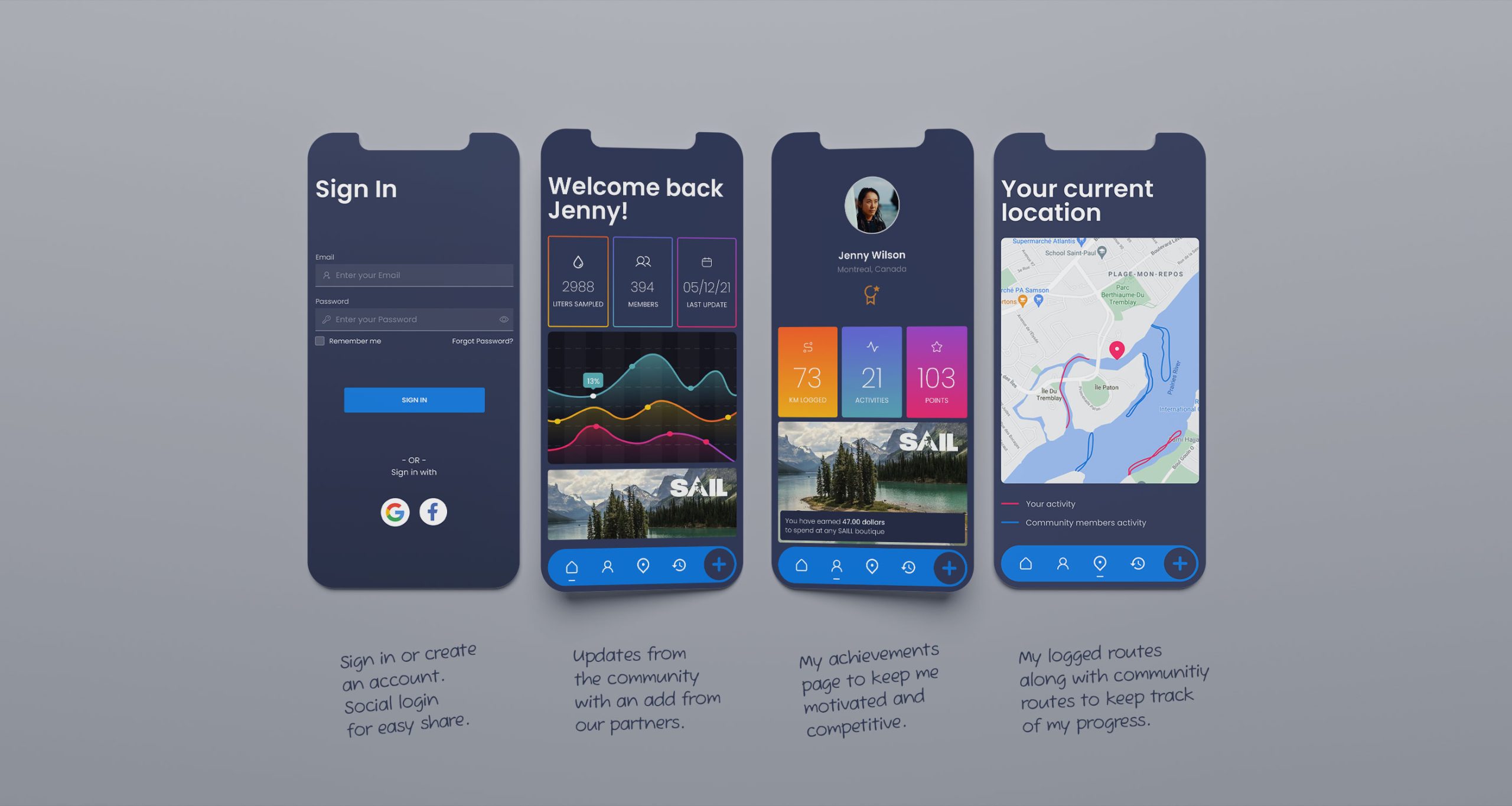
The final concept covers a full mobile flow: user profile with activity and rewards, an activity summary tied to sample drop-off, a gamification and rewards interface, a completed-activity screen, and the Nautiplastic name and logo created for the challenge.
Gamification
We’ve designed the app as a competitive challenge platform for paddle enthusiasts. Users compete, score points, and share their progress on social media to engage the community.
Rewards
Sponsorships enable a reward program for paddlers who log progress and drop off samples at partner locations. Points earned can be redeemed for discounts at sponsor spots.
Community builder
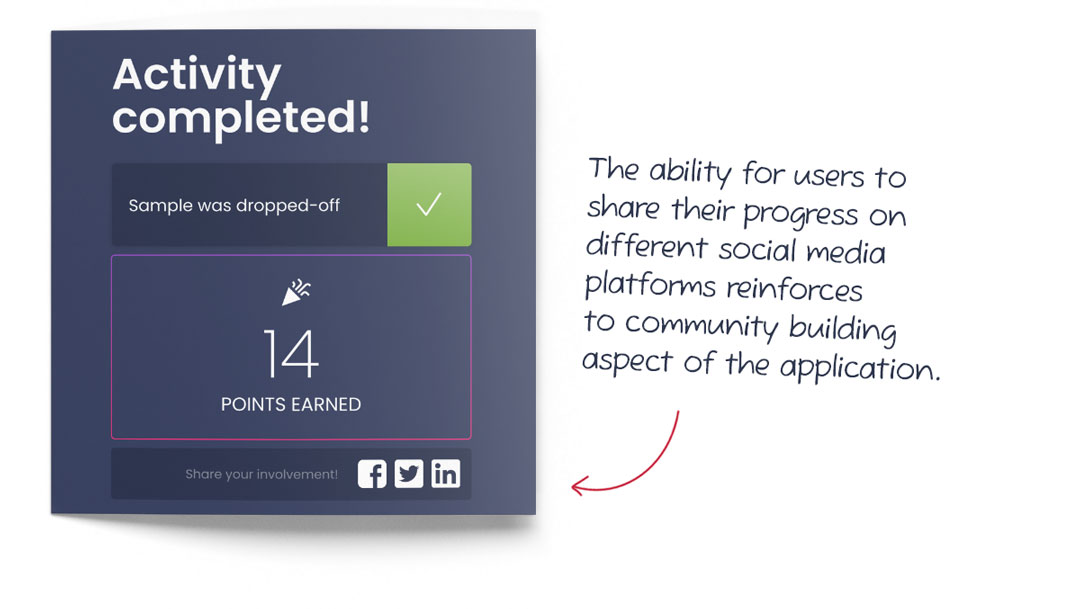
For Nautiplastic, fostering community is crucial for raising awareness. Users can share progress and demonstrate affiliation by posting on various social media platforms.
Reflexion
Placing second in a one-week sprint, with four roles split across the team and no time built in for a working prototype, is a solid outcome for a concept that started from nothing: no existing device, no user base, no prior research. My part of that week compressed into naming, logo, wireframes, and final screens, in that order, with almost no room to revisit a decision once it was made.
The one thing worth testing with more time is the gamification loop itself. It’s modeled entirely on the Strava analogy, the assumption that sharing progress and light competition drive participation, but that assumption never got checked against an actual paddler. Same with the outdoor-store drop-off model: strong business logic on paper, a built-in path to store traffic for sponsors, but we never got to see whether real partner stores would sign on or whether paddlers would actually make the trip to redeem a rebate. In a one-week exploration, building the concept instead of the validation is the right tradeoff, but it’s the first thing worth pressure-testing if this ever moved past the challenge stage.